Backyardastronomy.net

Astrophotography Gallery

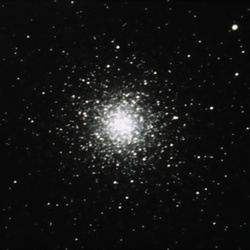
M3
M3
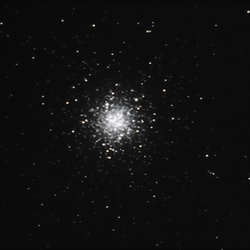
M3 - Globular Cluster M3 is one of the finest globular clusters in the northern sky, containing approximately 500,000 stars. It's considered one of the best test objects for telescopes due to its concentration. Distance: 33,900 light-years Apparent Magnitude: 6.20 Apparent Size: 18' Constellation: Canes Venatici Object Type: Globular Cluster (Class VI) Key Features: - ~500,000 member stars - Contains 274 variable stars (most of any cluster) - Age: 11.4 billion years - 12 billion solar masses - Discovered by Messier in 1764 Best Imaging Season: March - July Optimal Integration: 3+ hours
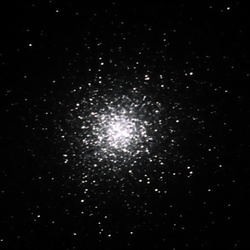
M5
M5
M5 - Globular Cluster M5 is one of the oldest globular clusters known, with an estimated age of 10.5 billion years. It's also one of the largest globulars, spanning 165 light-years in diameter. Distance: 24,500 light-years Apparent Magnitude: 5.65 Apparent Size: 23' Constellation: Serpens Caput Object Type: Globular Cluster (Class V) Key Features: - One of oldest known clusters (10.5 billion years) - 165 light-years diameter - ~100,000 stars - 105 variable stars - Large apparent size Best Imaging Season: April - July Optimal Integration: 3+ hours
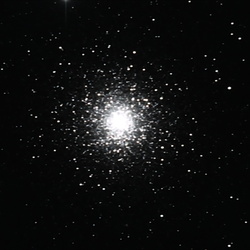
M13 (Hercules Cluster)
M13 - Hercules Cluster M13 is the brightest and most famous globular cluster in the northern sky, visible to the naked eye under dark conditions. It contains several hundred thousand stars. Distance: 22,200 light-years Apparent Magnitude: 5.80 Apparent Size: 20' Constellation: Hercules Object Type: Globular Cluster (Class V) Key Features: - Best northern globular cluster - ~300,000 stars - Age: 11.65 billion years - 145 light-years diameter - Arecibo message sent here in 1974 - Visible naked eye Best Imaging Season: April - September Optimal Integration: 3+ hours
M15
M15
M15 - Globular Cluster M15 is one of the densest globular clusters known, with a collapsed core that may contain a black hole. It's also one of the oldest clusters in the Milky Way. Distance: 33,600 light-years Apparent Magnitude: 6.20 Apparent Size: 18' Constellation: Pegasus Object Type: Globular Cluster (Class IV) Key Features: - Collapsed core (one of few known) - Possible intermediate-mass black hole - Age: 12 billion years - 112 variable stars - Contains planetary nebula Pease 1 Best Imaging Season: July - November Optimal Integration: 4+ hours
M44 (Beehive Cluster)
M44 - Beehive Cluster (Praesepe) M44 is one of the nearest open clusters to Earth and has been known since ancient times. It appears as a fuzzy cloud to the naked eye but resolves into stars with binoculars. Distance: 610 light-years Apparent Magnitude: 3.70 Apparent Size: 95' Constellation: Cancer Object Type: Open Cluster Key Features: - One of nearest open clusters - ~1,000 stars total - Age: 600 million years - Visible naked eye - Known since antiquity - Shares motion with Hyades Best Imaging Season: January - May Optimal Integration: 2+ hours (wide field)
M45
M45
M45 - Pleiades (Seven Sisters) The Pleiades is the most famous open cluster and one of the nearest to Earth. It's surrounded by a reflection nebula illuminated by hot blue stars. Distance: 444 light-years Apparent Magnitude: 1.60 Apparent Size: 110' (nearly 2°) Constellation: Taurus Object Type: Open Cluster + Reflection Nebula Key Features: - Nearest Messier object - 7 visible stars (named for 7 sisters) - ~1,000 total members - Reflection nebula (Maia Nebula) - Age: 100 million years - Visible naked eye Best Imaging Season: October - February Optimal Integration: 4+ hours (wide field)
M53
M53
M53 - Globular Cluster M53 is a globular cluster in Coma Berenices, one of the more distant clusters visible in amateur telescopes. It appears near the star Diadem. Distance: 58,000 light-years Apparent Magnitude: 7.60 Apparent Size: 13' Constellation: Coma Berenices Object Type: Globular Cluster (Class V) Key Features: - One of more distant globulars - ~500,000 stars - Age: 12.7 billion years - 220 light-years diameter - Near NGC 5053 (fainter companion) Best Imaging Season: March - June Optimal Integration: 5+ hours
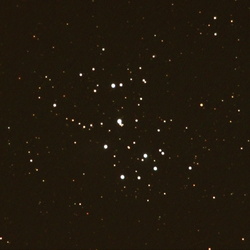
M67
M67
M67 - Open Cluster M67 is one of the oldest known open clusters and the closest to our Sun's age. Its stars have a similar composition to the Sun, making it important for stellar studies. Distance: 2,700 light-years Apparent Magnitude: 6.10 Apparent Size: 30' Constellation: Cancer Object Type: Open Cluster Key Features: - Age: 3.2-5 billion years (Sun-like) - ~500 stars - Similar chemical composition to Sun - Important for stellar evolution studies - Trumpler classification: II2r Best Imaging Season: January - May Optimal Integration: 3+ hours