Lightning
Lightning - Atmospheric Phenomenon
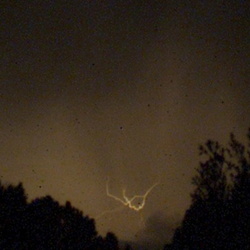
Lightning is a sudden electrostatic discharge during thunderstorms. It's one of nature's most powerful and dramatic phenomena, with temperatures reaching 30,000 Kelvin (5x Sun's surface).
Physics:
- Voltage: 100 million - 1 billion volts
- Current: 30,000-300,000 amps
- Temperature: 30,000 K
- Speed: 220,000 km/h
- Causes thunder (sonic shock wave)
Types:
- Cloud-to-ground (CG)
- Intra-cloud (IC)
- Cloud-to-cloud
- Positive lightning (rare, powerful)
- Ball lightning (mysterious)
Photography Tips:
- Use bulb mode with remote
- ISO 100-400, f/8-f/11
- Long exposures (10-30 seconds)
- Tripod essential
- Safety first! Stay indoors
Sprites - Other TLEs
Sprites & TLEs - Transient Luminous Events
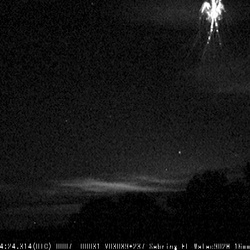
Sprites, elves, jets, and other Transient Luminous Events (TLEs) are large-scale electrical discharges that occur high above thunderstorms. They were only scientifically documented in 1989.
Types of TLEs:
- Sprites: Red-orange, 50-90 km altitude
- Elves: Expanding rings, 85-95 km
- Blue jets: Upward from cloud tops
- Gigantic jets: Reach ionosphere
- Halos: Disk-shaped, before sprites
Key Facts:
- Last only milliseconds
- Associated with positive lightning
- First photographed 1989
- Visible 100+ km from storm
- Best viewed with clear horizon
Photography Tips:
- Video at high frame rate
- Dark sky location
- View distant storms
- Look above storm tops
- Use sensitive camera (low light)